Overview
The Work
I rebuilt Interaction Design I and Interaction Design II over the summer of 2026. The two courses now work as a single system across two semesters, and very little survived from the versions they replace. They run for the first time this fall.
The reason came from my day job. AI has made execution close to free. A component that used to take a junior designer an afternoon now takes thirty seconds. That changes which part of the job is the job. The scarce thing now is deciding what to build, and defending that decision to people who push back.
I've taught here since 2011. This is the first time I've thrown out the premise instead of the syllabus.
Challenge
The Problem
I've hired interns and early-career designers, and they arrive with a process they can run flawlessly. They know the double diamond. They can facilitate a workshop and synthesize a research board. Then someone hands them a half-written ticket for a product they didn't design, inside a system they didn't build, and the requirements move on Thursday. That's where they stall. Not on craft. On ambiguity.
School creates that gap without meaning to. Students choose their own project, write their own brief, and set their own scope. Every constraint is one they picked, which makes every constraint negotiable. They graduate having never practiced the part of the work that turns out to be most of the work.
AI turned that gap from an inconvenience into a real problem. The old bargain was that if you learned the tool well enough, you'd be employable. That bargain stopped paying. Teaching AI as one more tool in the sequence would have repeated the same mistake at higher speed.
When execution is cheap, judgment is everything.
Approach
How I Worked
I built these the way I'd build a product. Start with the failure you keep seeing, write down what has to be true to fix it, then work backward into the weeks.
01Start from the hiring problem, not the syllabus
Before I wrote a single week of content, I wrote down what I had watched go wrong in early-career designers on real teams. The field has its own list of what matters; I ignored it and used mine. That list became the specification, and every week of both courses had to earn its place against it.
02Write the argument before the courses
I wrote a redesign brief first: what these two courses are for, what changed in the field, and what a graduate should be able to do on their first day. It gave every later decision something to be checked against. When I couldn't tell whether an assignment belonged, I went back and asked whether it served the argument or just filled a week. Several didn't survive that question.
03Throw out the first versionThe rebuild
I built a complete spine for both courses and then retired it. It rested on a wrong assumption about where the first course ended, and every decision downstream inherited the error. Rebuilding cost me a few weeks. Keeping it would have cost students a semester.
04Design the ambiguity inInteraction Design II
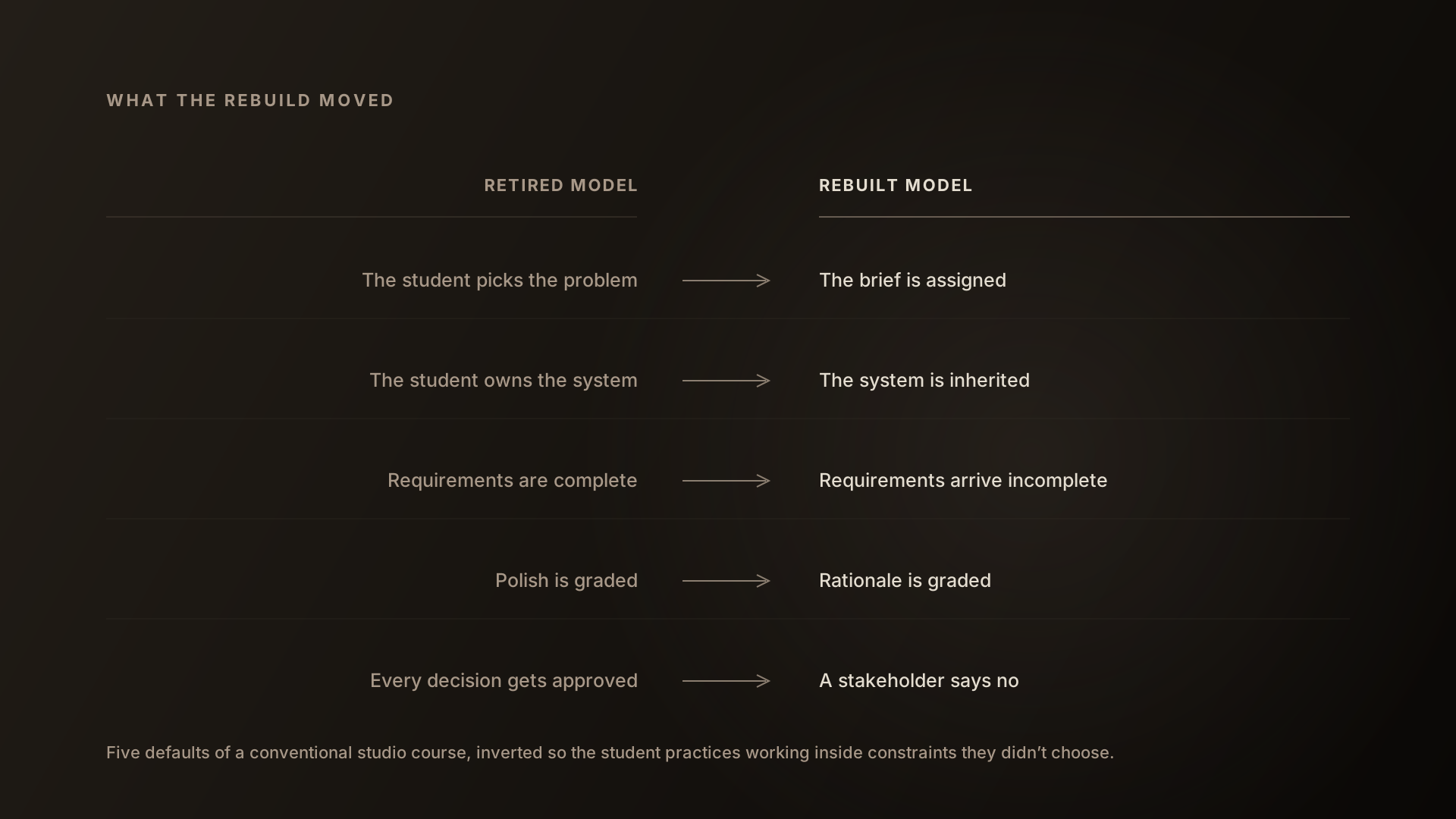
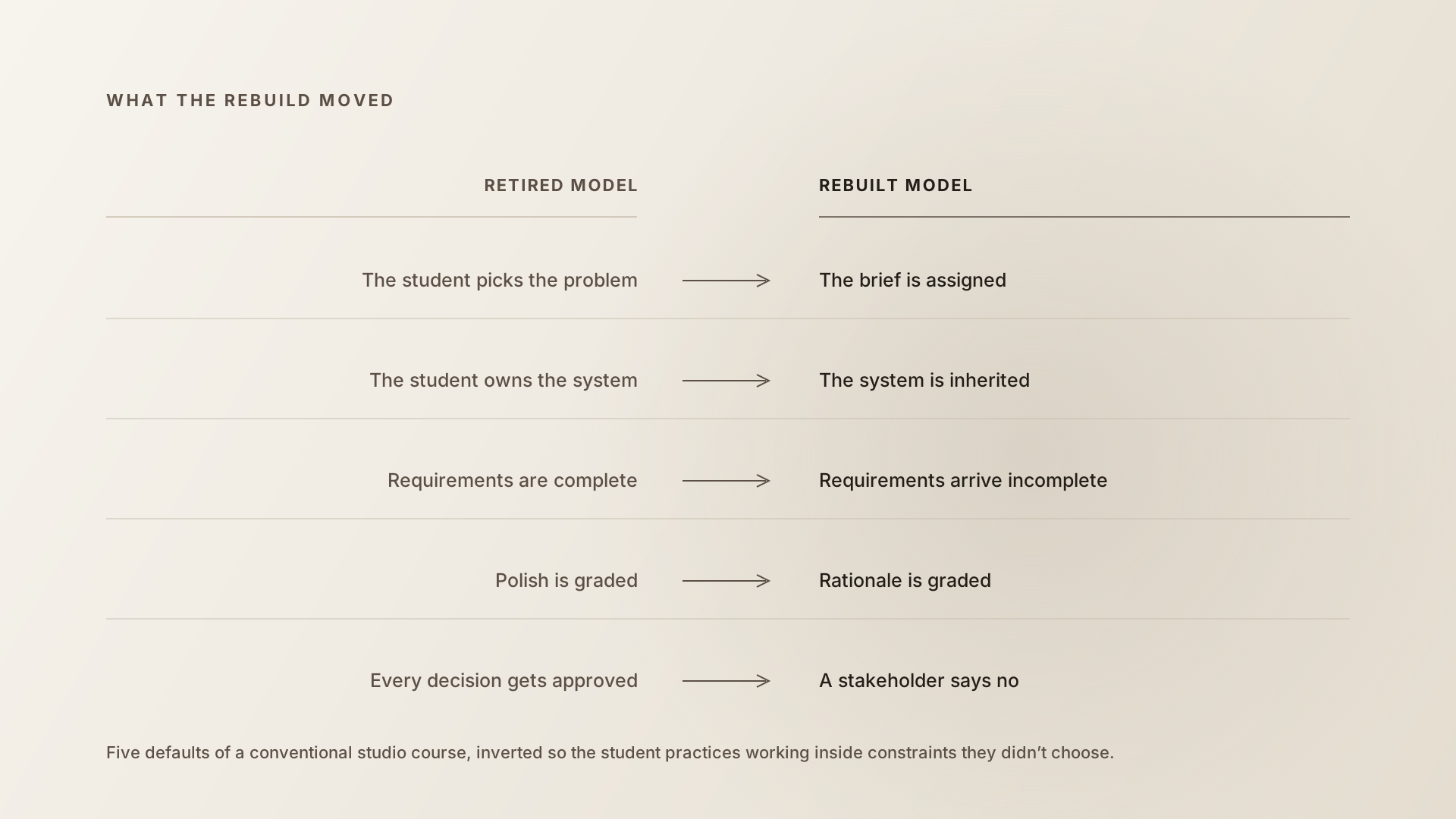
Students don't pick their own problem. They get a brief someone else wrote, for a product they didn't design, on top of a system they don't own. Requirements arrive incomplete on purpose, and working out what's missing is the assignment rather than a prerequisite to it. This is the biggest single change from the courses these replace.
05Sequence AI instead of allowing itInteraction Design I
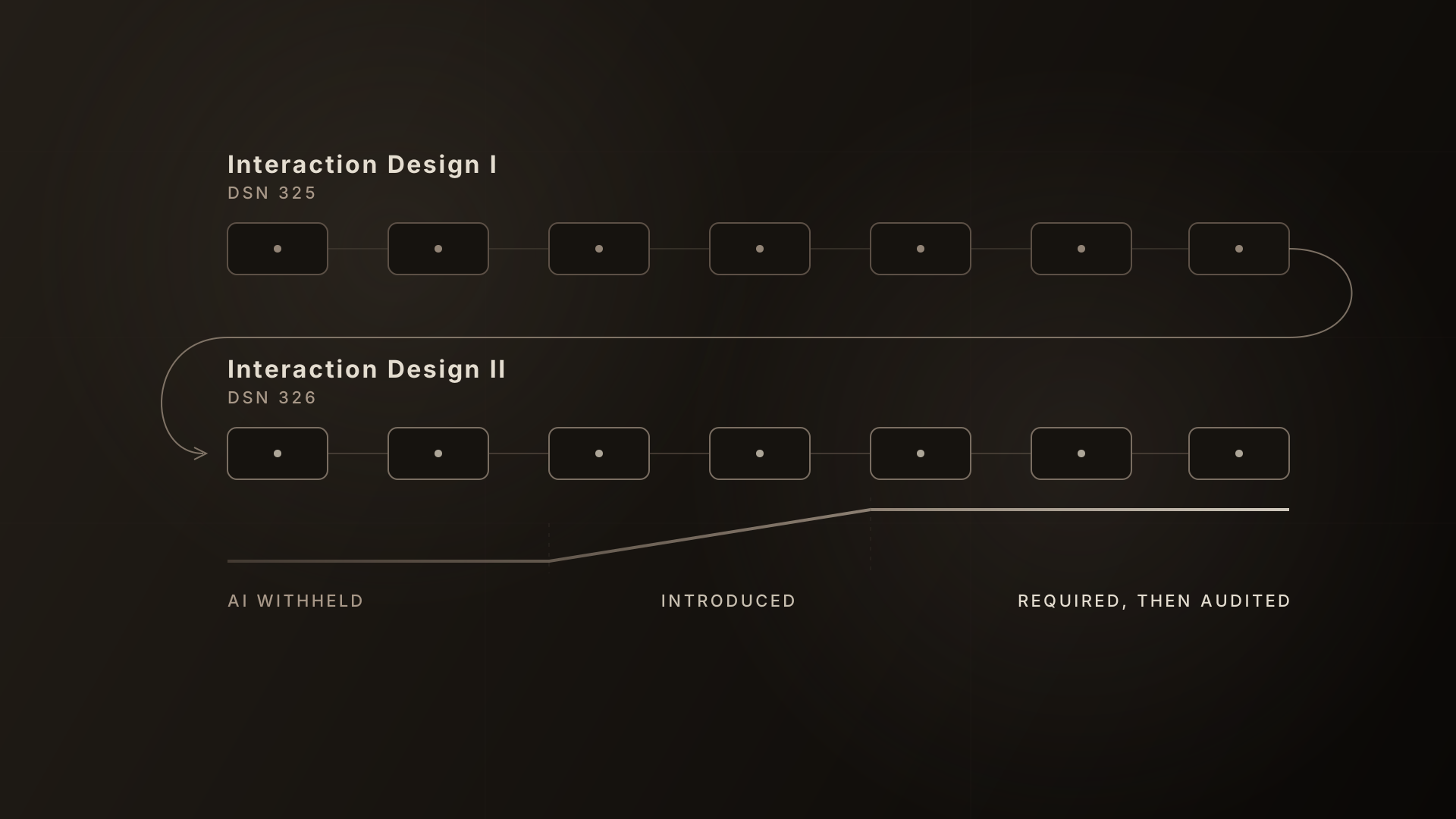
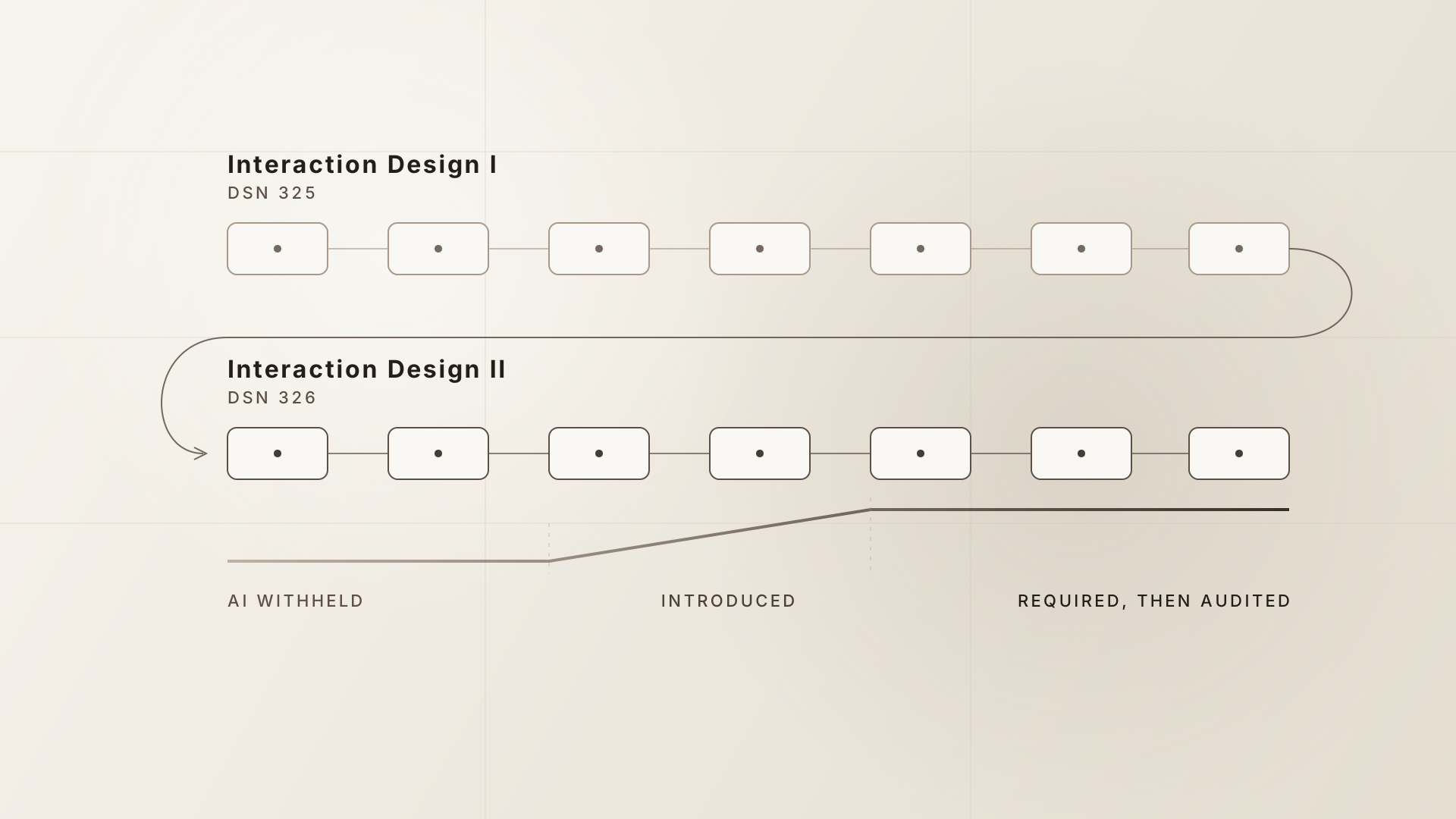
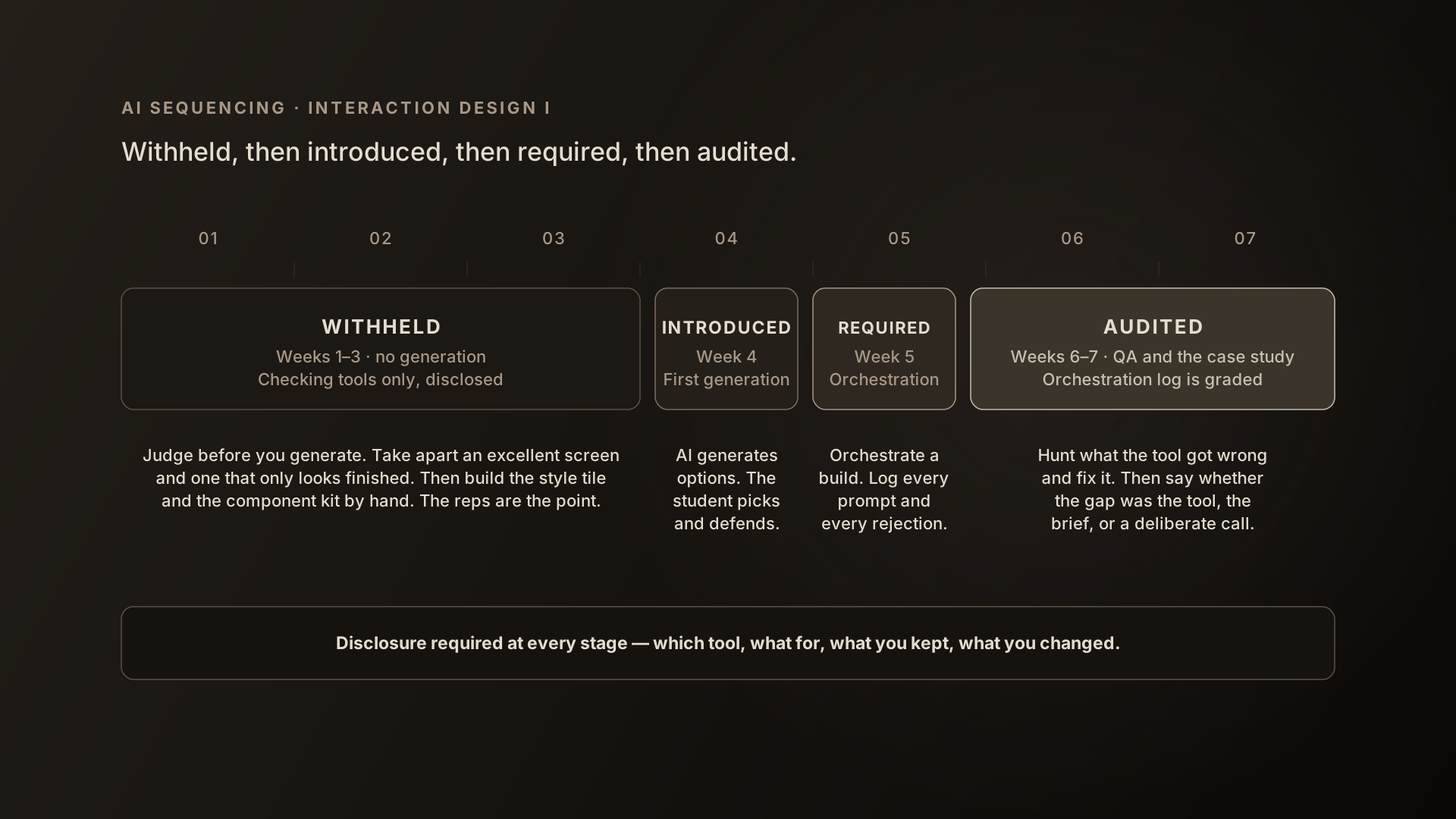
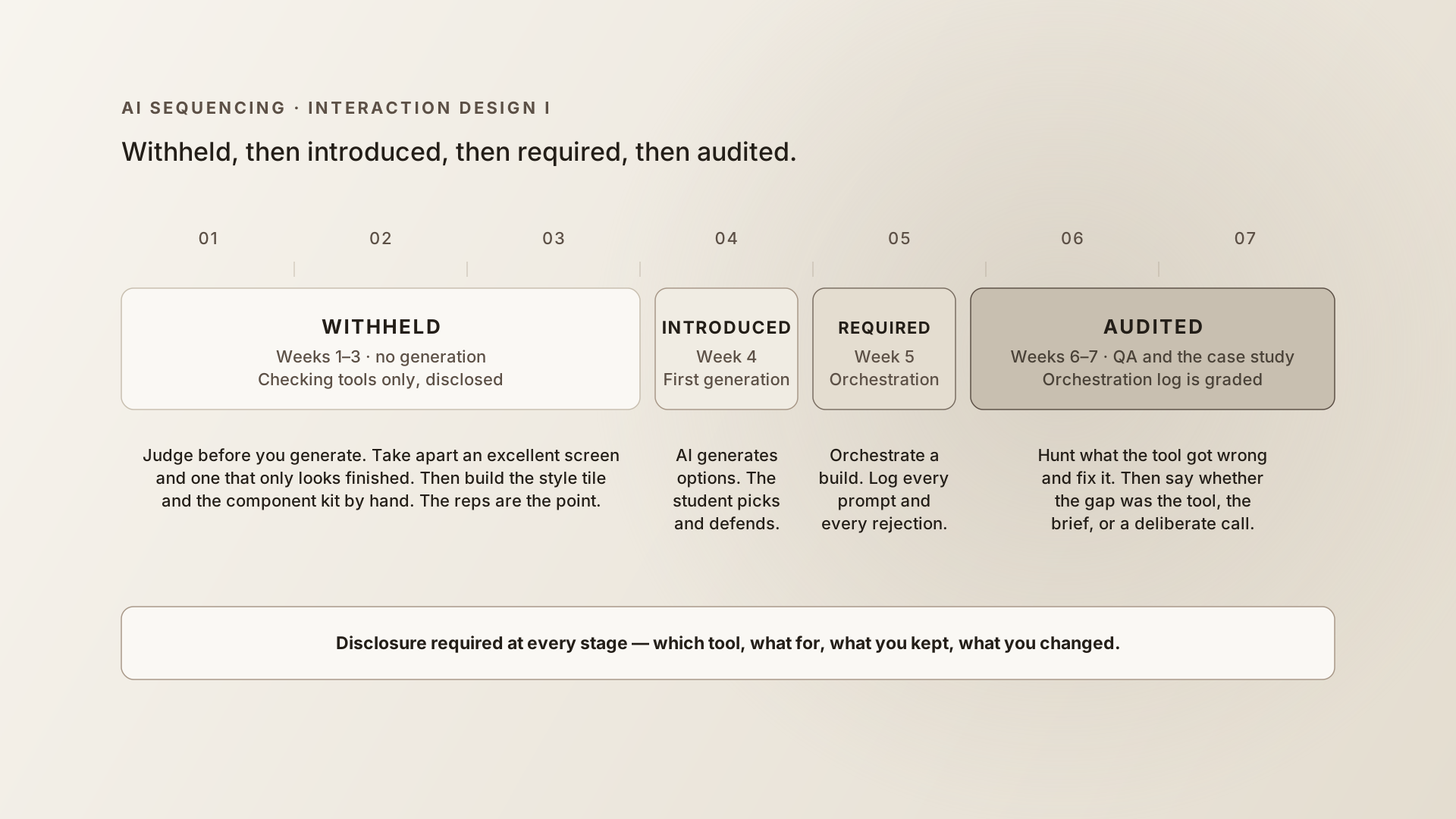
The first course withholds generation for the opening weeks. Students learn to tell finished work from work that only looks finished, before they can produce either at volume. Then AI becomes required. Then they have to audit what it handed back and say whether each gap came from the tool, from their own underspecified brief, or from a decision they made on purpose.
06Put someone in the room who says noInteraction Design II
Students answer to a design director who owns the system and turns down most requests to change it. A constraint lands mid-project and has to be accepted, declined, or countered in writing, with the tradeoff named. Nobody learns to defend a decision in a room where every decision gets approved.
07Grade the reasoning
I rebuilt the rubrics so rationale carries the most weight. A rougher screen with a defensible reason scores above a polished one without. If a student can't say why they made a choice, the choice reads as arbitrary and scores like it.
Solution
What We Built
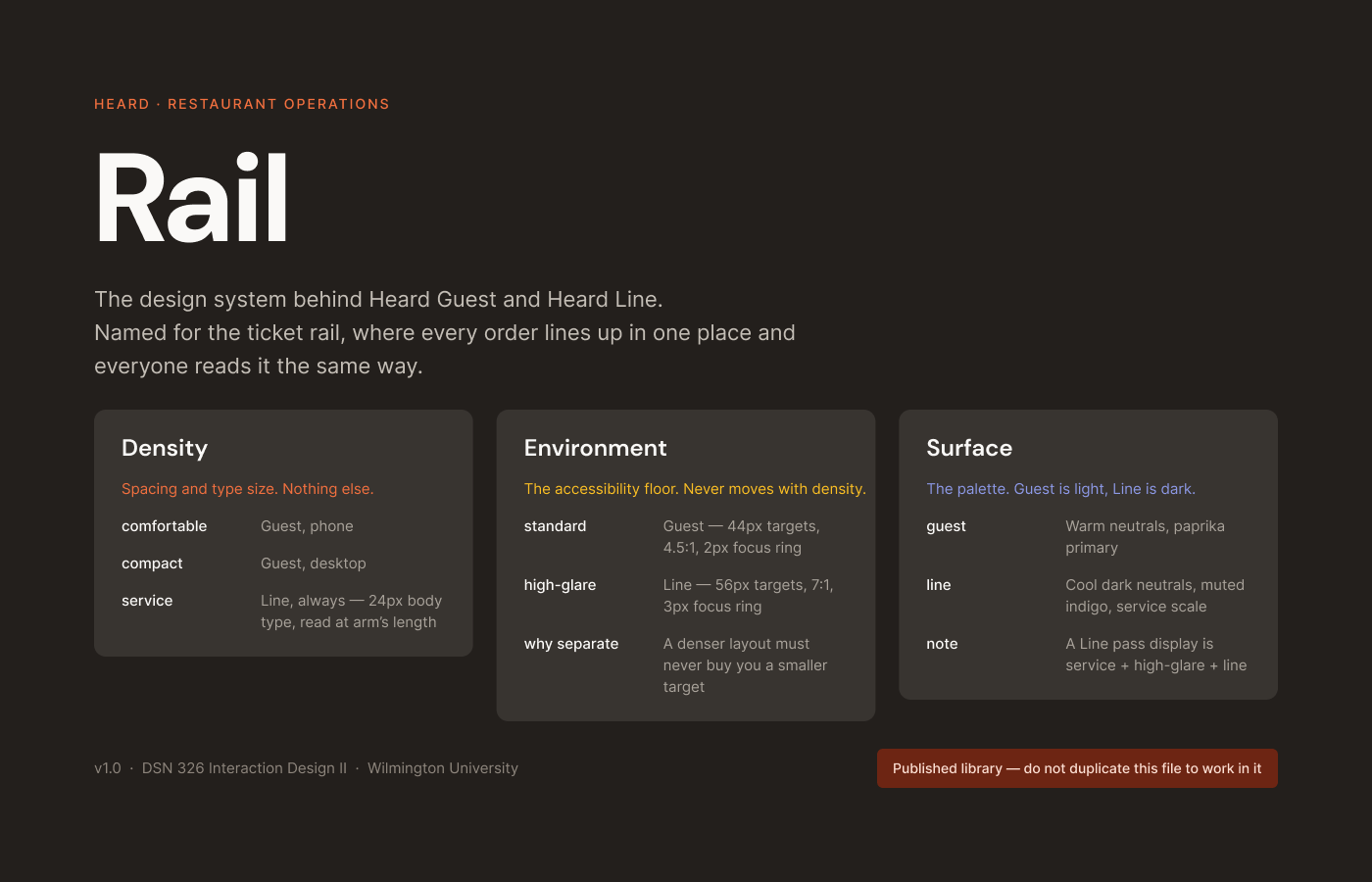
The two courses are one system, and the second only works because of what the first one refuses to skip. Two things hold them together: the design system students inherit, and one rule about AI.
Use the left and right arrow keys to move between images.The flat stretch on the AI line costs three weeks of production time. That is what being able to judge the output is worth.
Two courses, in sequence
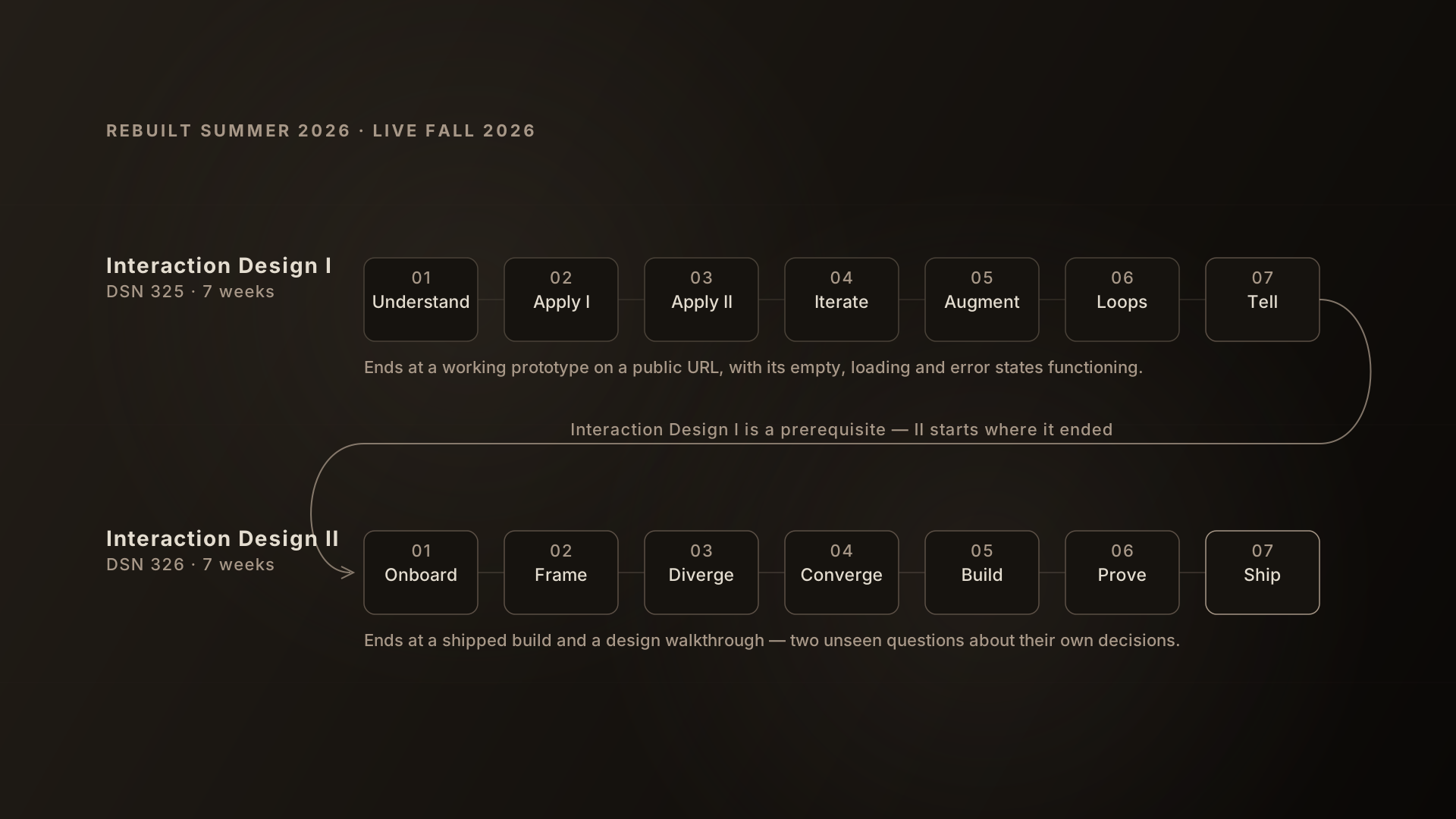
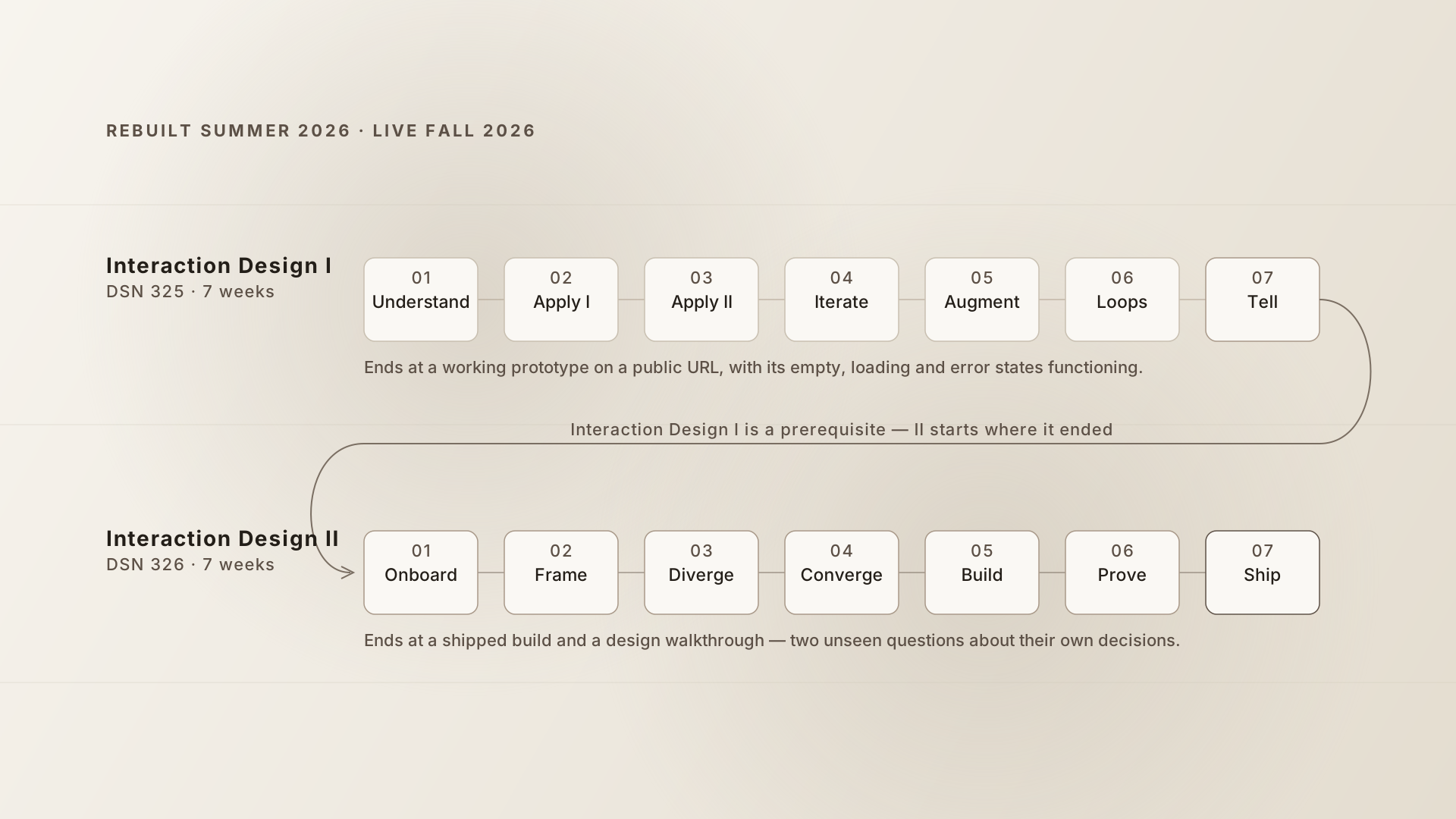
Interaction Design I is a prerequisite for II, and I built the second course to assume everything the first one taught. The first sets the craft under conditions the student chooses. The second takes those conditions away, one row at a time.
DSN 325 · First semester
Interaction Design I
Can you build something good, and say why?
Seven weeks
- 01Understand
- 02Apply I
- 03Apply II
- 04Iterate
- 05Augment
- 06Loops
- 07Tell
Constraints the student chooses
Ends at
A working prototype on a public URL, with its empty, loading and error states functioning.
What this course adds
- Judging quality before being allowed to generate any
- Building a style tile and component kit by hand
- Directing AI, then logging what they rejected and why
DSN 326 · Second semester
Interaction Design II
It shipped. Did it work, and how do you know?
Seven weeks
- 01Onboard
- 02Frame
- 03Diverge
- 04Converge
- 05Build
- 06Prove
- 07Ship
Constraints someone else set
Ends at
A shipped build, a measured comparison against a baseline, and a design walkthrough with two questions they have not seen.
What this course adds
- Reading a requirement that arrives incomplete
- Testing the current product before designing anything
- Three genuinely different options, one chosen on evidence
- Pricing a change to a system they do not own
What changes between the two courses
What changes between Interaction Design I and Interaction Design II| | Interaction Design I | Interaction Design II |
|---|
| The brief | The student writes it | Someone else wrote it, badly |
|---|
| The design system | The student builds it | The student inherits it |
|---|
| Success | The student asserts it | The student measures it |
|---|
| The audience | Peers and an instructor | A director who says no |
|---|
The brief
Design I The student writes it
Design II Someone else wrote it, badly
The design system
Design I The student builds it
Design II The student inherits it
Success
Design I The student asserts it
Design II The student measures it
The audience
Design I Peers and an instructor
Design II A director who says no
A design system they inherit instead of build
I built Rail, published it, and kept it small on purpose. A system with forty components has an answer for everything and teaches nothing. When students need something Rail doesn't have, they can't fork it or patch around it. They write a proposal and price what it costs to build, maintain, document, and set as precedent. Wanting something becomes a tradeoff instead of a preference.
One rule about AI that never bends
You own what you submit and you disclose what the tool did. Which tool, what for, what you kept, what you changed. Undisclosed use is an integrity matter, not a point deduction. And full credit is available with zero AI use, because what gets graded is the direction and the judgment, never which tool made the pixels.
Results
What Changed
Both courses are built and open for the fall. So is Rail, the starter codebase students clone on day one, and a reference build that puts the system through two different products. All of it shipped before the term opened.
The courses haven't run yet, so I have no student outcomes and I'm not going to invent any. What I could do was test them without students, and the tooling was AI, which I'll disclose since I make students do the same. I had models play students at three different effort levels, produce real submissions, and then had another model blind-grade them with the personas stripped and the order shuffled. It ranked them correctly, which told me the rubrics separate real work from filler. A second pass walked the live course cold, prompted as an adjunct hired two weeks before term with no access to me. Both found real defects — the sharpest being a scoping rule I thought was airtight that let an over-scoped product through on a technicality. All of it got fixed before launch.
The longer record is the part I trust. I've taught here since 2011, and I've since worked alongside former students at Chatham Financial and back at the university. These two courses, with CSC 370 carrying the research half, are the backbone of the UX certificate and the Interaction Design B.S. I advise the program chair on where the field is moving. Fall 2026 is the first real test of this rebuild. I'll know by December what I got wrong.
See it yourself
What I can show you
Rail, the starter, and the current version of the product are all reachable without an account. I left the instructor material out. Answer keys stay off a page students can find.
Rail, the design system students inherit
The published library, the source, and the Figma file the code is generated against. This is exactly what students get on day one.
The product students are handed
The existing version of Heard. Students test it with real people and measure it before they design anything, so their week-six comparison has a baseline to beat.
What students start from
A template repo with no framework and no build step, plus the Figma files they duplicate in the first course.
Reflection
What I Learned
01The brief you didn't write is the whole lesson
I spent years improving how students execute. Execution was never what held them back. A student who defines their own brief defines a tractable one, not out of laziness but because that's what any person does when they can. Handing them a problem someone else defined badly changed more about their work than any craft assignment I've given.
02Writing bad briefs on purpose made me better at writing good onesInteraction Design II
Every gap I engineered into a student brief is one I have shipped to a designer on my own team by accident. Building the incomplete version deliberately, over and over, made me much quicker at catching the incomplete version I wrote without meaning to.
03Withholding the tool is how you teach the toolInteraction Design I
Students who generate before they can judge can't tell good output from output. They ship whatever came back. A few weeks of building by hand costs production time and buys the ability to look at what AI produced and say precisely what's wrong with it. That's the part worth paying for now.
04Move what you score and the work moves with it
Students practice what's graded, not what's taught. When rationale became the heaviest thing on every rubric, the quality of thinking changed first and the artifacts followed.
05A system that can't say no isn't teaching anythingInteraction Design II
I made Rail small and rigid. Every instinct I have as a designer said to give students more components. Every instinct I have as a design leader said the constraint is where the learning is. The design leader was right.
06Retiring your own first draft is the jobThe rebuild
I built a version of this curriculum, found the premise wrong, and scrapped it. That's the same discipline as killing a feature you like, and it's no more pleasant in a syllabus than in a roadmap.
 Ryan Higgins